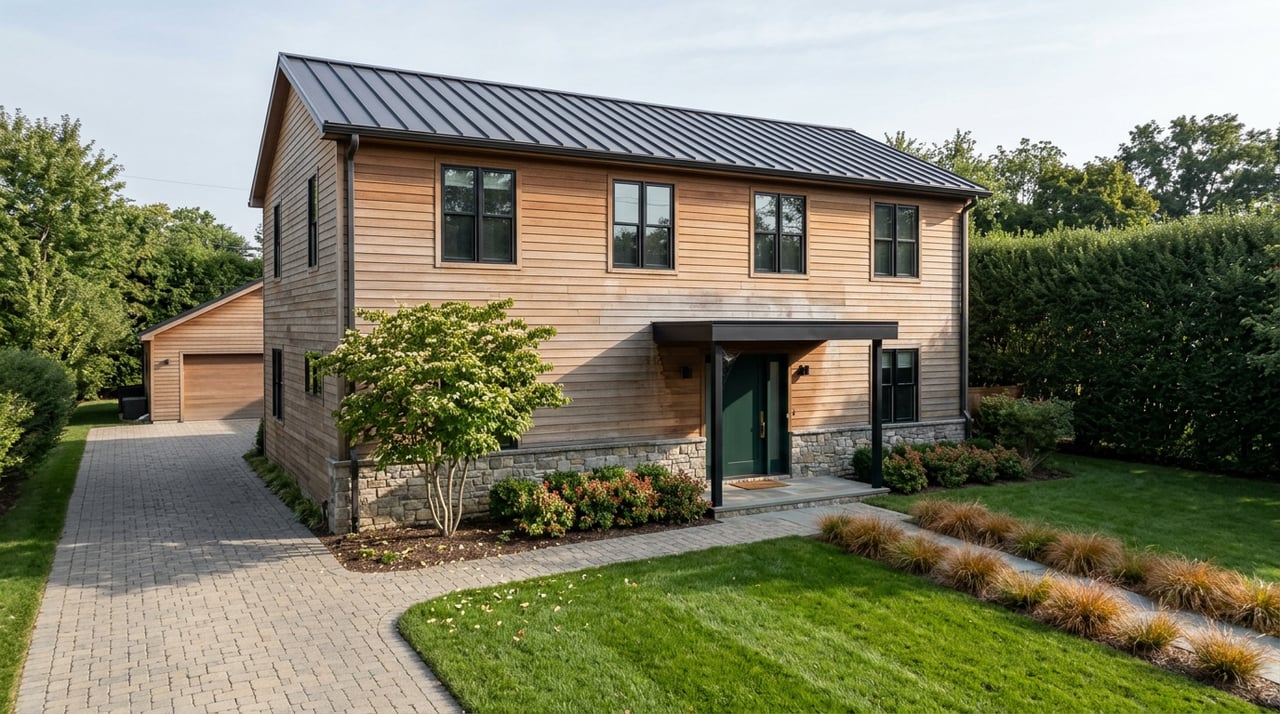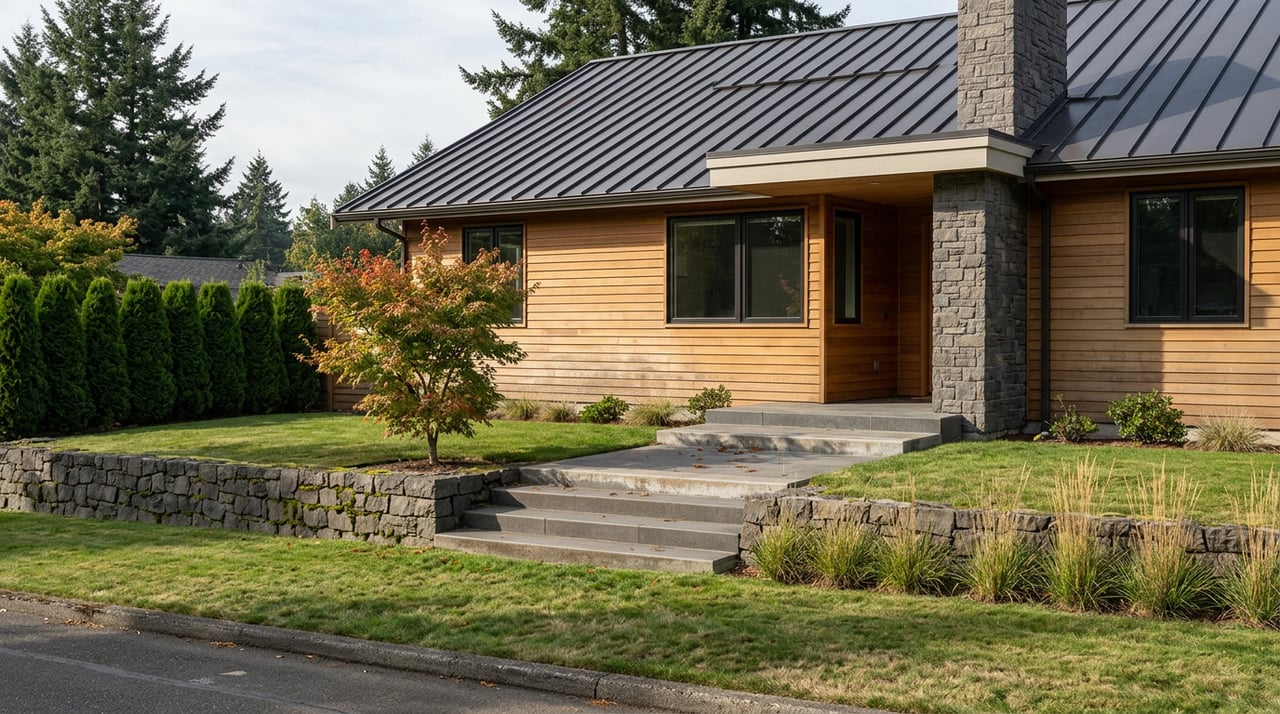
Ask your agent whether the seller has ever ordered a geotechnical opinion. On some Oregon City offers, that question gets a straightforward yes or no. On others, in the same zip code, the seller has never had to think about it. The difference isn't luck. It's which of the city's three terraces the house sits on, and that same terrace divide is quietly running the entire local market: price, pace, product, and paperwork.
Oregon City looks like one city on a map. It isn't one market. It's three, stacked vertically on a basalt bluff, and the city built a municipal elevator in 1915 for the sole purpose of connecting them because walking between them meant climbing roughly 722 wooden steps. That elevator, still running today as the only outdoor municipal elevator in the country and one of just four in the world, is a useful shortcut for understanding why a home search here behaves so differently depending on where you point it.
A City Built in Three Layers
Oregon City's downtown sits on the lower terrace, wedged between the Willamette River and the cliff, only a few blocks wide. As the city grew in the late 1800s, residential neighborhoods and schools moved up onto the second terrace, the bluff, which is now the historic McLoughlin district. By the mid-20th century, postwar prosperity pushed development further east onto a third terrace above that.
The elevator exists because that vertical geography was a real obstacle, not a scenic detail. Voters approved a $12,000 bond for it in 1912, the original water-powered lift opened in 1915, and the current electric version, rebuilt in 1955, still connects downtown to the bluff in about 15 seconds. It's often called the only "vertical street" in North America, and it's a decent metaphor for the market: the terraces are close together in distance and far apart in what they're actually selling.
What Each Terrace Actually Sells
The numbers make the split concrete. Citywide, the market has been steady but not hot. Over the three months ending in May 2026, homes sold at a median of $579,000, down 1.1 percent from the same period a year earlier, with a median of $316 per square foot, up 1.3 percent year over year, and an average of 21 days on market compared to 18 days the year before. Zillow's average home value for Oregon City, as of July 2026, was $605,330, up just 0.1 percent over the past year, with homes going pending in around 12 days.
Move onto the bluff, into the McLoughlin district specifically, and the picture shifts. Over the trailing 12 months, the median sale price there ran closer to $500,000, up about 2 percent year over year, with homes typically selling in 27 days against a national average of 53. As of late August 2026, McLoughlin listings were moving at a similar clip, with a median pending price around $520,000 and an average of 28 days on market. The neighborhood carries a Walk Score of 62, meaningfully more walkable than the newer subdivisions further out, because it was built before anyone was designing around a car.
| Terrace | What's actually there | Recent price signal | Typical pace |
|---|---|---|---|
| Lower terrace / downtown | Commercial core, historic Canemah district, river and falls proximity | Citywide median $579K (3 mo. ending May 2026) | 21 days on market |
| Bluff / McLoughlin district | Craftsman, Foursquare, and bungalow stock from the 1900s-1950s, walkable to Main Street | McLoughlin median ~$500K-$520K | 27-28 days on market |
| Upper terrace / new growth | New construction communities, larger lots, car-oriented layout | Zillow avg. home value $605,330 (as of July 2026) | ~12 days to pending |
Put those three rows side by side and the "Oregon City market" stops being one number. It's a historic walkable district trading at a discount to the citywide average, a newer growth corridor moving faster than either, and a downtown core anchored by tourism and river access. A buyer comparing "Oregon City" to a flat westside suburb on a single median price is comparing an average of three different products.
Why the Slope Shows Up on the Disclosure Form
Oregon's Seller's Property Disclosure Statement asks the same standardized questions everywhere in the state, covering title, water and sewer, structure, systems, and general condition. What changes in a place built on a cliff is how often the answers point toward the hill itself. Buyers here are more likely to see disclosure notes about drainage or grading, and it's common advice for homes on or near slopes to pair the standard home inspection with a drainage-focused inspection or a structural and geotechnical opinion before removing contingencies.
Two other terrain-adjacent items come up more often here than in flatter suburbs. Clackamas County still has plenty of homes on septic systems, which means a septic inspection with pump and service records is worth ordering whenever the disclosure shows one, and even homes on sewer benefit from a sewer scope to check the lateral line for damage or root intrusion. Unpermitted additions are also a frequent disclosure item, worth confirming against county permit records rather than taking the seller's description at face value.
None of this makes Oregon City riskier to buy in. It means the inspection contingency window has to work harder here, and a buyer who treats it like a generic 10-day formality is the one who ends up negotiating repairs after close instead of before.
A few questions worth asking before you write an offer:
- Has this property, or the street it's on, ever had a geotechnical or drainage-focused inspection, and can the seller produce it?
- Is the home on septic or sewer, and if septic, what do the pump and service records show?
- Are there any additions, garage conversions, or major mechanical upgrades that should show up in county permit records but might not?
- If the disclosure notes any grading or drainage concern, has it been addressed, and is there documentation of the fix?
The Street of Dreams Just Left Town
If you searched "Oregon City real estate" at any point this summer, you likely ran into coverage of the NW Natural Street of Dreams, which marked its 50th anniversary this year. The featured site was Serres Farms in Oregon City, developed by Icon Construction, and the show ran from July 30 through August 23, 2026, before closing for the season. Seven luxury custom homes anchored the site, alongside a 28-unit Forrest Ridge Homes townhome community, the first time in the event's 50-year history that a townhome project was featured at all.
That kind of attention creates real, temporary visibility for one specific pocket of new construction. It doesn't rewrite the citywide numbers, and it's already over as of this writing. A buyer who started researching Oregon City because of Street of Dreams coverage should treat that as an introduction to one new-growth corridor, not a summary of the whole city, especially given how differently the bluff and the upper terrace are actually performing right now.
Reading the Ladder Beyond the Show
New construction in Oregon City right now is concentrated in a small number of distinct projects rather than spread across dozens of subdivisions, and the ladder between them is wide. Serres Farms itself covers two very different products: a roughly 44-home detached community near Holcomb Elementary and I-205 with floor plans from about 1,700 to 3,181 square feet, and the separate Forrest Ridge Homes townhome phase starting in the low $500s. At the top of the new-construction range, The Reserve at Riverstone offers five acreage homesites on South Brunner Road, ranging from about 1.88 to 6 acres, with pricing currently listed from $1,376,000.
Set that ladder next to the bluff's older housing stock and the choice for a buyer becomes less about "which Oregon City" and more about which product: a walkable 1910s Craftsman near Main Street with a lower median price and a slower, steadier pace, or a new-build community with a faster path to pending and a completely different disclosure conversation, since new construction that's never been occupied is exempt from Oregon's standard seller disclosure requirement altogether.
That last point matters more than it sounds. On the bluff, the disclosure statement is often the most useful document in the file, written by someone who's lived through the house's quirks. On a never-occupied new build, there's no disclosure history to read at all, and the inspection has to do more of the work a decade of ownership would normally have already surfaced.
Reading that difference correctly, and knowing which terrace's paperwork to expect before you're already under contract, is the kind of thing a background in real estate litigation trains you to catch. Matt Booth spent years practicing real estate litigation in Portland before moving into brokerage, and that habit of reading contracts and disclosures for what they don't say carries directly into a market like this one, where the same standardized form means something different depending on which terrace it was filled out on.
If you're weighing a bluff bungalow against new construction on the upper terrace, or trying to figure out what a listing on Canemah Bluff or near the Municipal Elevator is actually worth compared to the citywide median, let's connect.
A Few Questions Worth Asking Directly
Does every Oregon City home need a geotechnical report? No. It's a targeted recommendation for homes on or near slopes, not a citywide requirement, and it comes up more often on bluff-adjacent and hillside lots than on flat interior parcels.
Is new construction exempt from the seller disclosure form? Yes, in Oregon, the first sale of a dwelling that has never been occupied is one of the statutory exemptions from the standard property disclosure requirement, which is part of why the inspection matters even more on a brand-new home.
Is the Street of Dreams still running? No. The 2026 show, held at Serres Farms, closed on August 23, and any temporary attention it brought to that corridor has already started to settle back into the normal seasonal pattern.